



Mastering the challenges in retail with SAP Business One
Companies in the trade sector They distribute consumer goods from sectors such as electronics, cosmetics, food, furniture, or clothing. They often break down the traditional separation between wholesale and retail, as they primarily supply retailers (B2B) but also sell directly to end customers (B2C) through e-commerce solutions. Building their own brands plays a crucial role in this.
Different sales channels generate a multitude of documents that can no longer be managed with Word and Excel. central challenge For trade, in particular, the Monitoring, planning, and communication of inventory levels. Failure to master this challenge will quickly result in penalties from business partners, which will be reflected in subsequent revenue losses.
A unified ERP solution creates transparency. This is beneficial for every company, as all company data is centrally consolidated. Thanks to cloud-based networking, all employees have access to the same information. Furthermore, seamless integration with other cloud applications (webshops, marketplaces, etc.) provides a competitive advantage.
SAP Business One Demo Version
Structured business processes
SAP Business One features built-in processes for the retail sector that can be used immediately, ensuring structured business operations. The ERP system includes all essential company data, manageable via dashboards that any user can create using a pre-built library of key performance indicators (KPIs). SAP Business One enables detailed reporting based on real-time data, either customized or using time-saving, standardized templates.

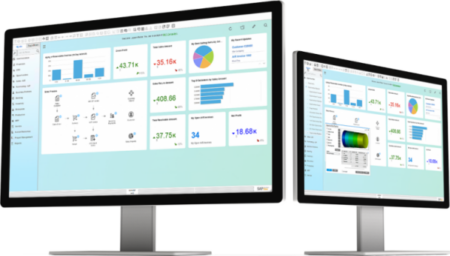
Maintain an overview with analytics and reporting
The more customers and orders, the greater the risk of losing track. SAP Business One consolidates all important information from sales, customer management, operations, and financial management and makes it available company-wide. Instead of being stored in multiple Excel spreadsheets, the data is integrated into the... fully integrated system Centrally stored. The essence of it: Reliable data, decreasing error rates and consequently decreasing costs.
Start your free live demo nowMake sales efficient
The sales department needs information about customers and products to properly prepare for customer appointments. The SAP Business One Sales App for tablets and smartphones enables this. access based on this master data from anywhere and in real time. During customer appointments, quotes and orders can be created immediately and seamlessly transferred from the sales force to the back office. Inventory levels, deliveries, and invoices can be viewed anytime, anywhere, allowing for immediate answers to questions about delivery dates, for example, during customer visits. Sales can be managed using customizable dashboards within the app.
Online marketplaces
Online marketplaces have become incredibly important in today's retail landscape. Reaching end customers (B2C), for example through e-commerce, allows for strong customer relationships, and insights into the end customer are often incorporated into product development. However, experience shows that many companies don't use any online marketplace at all, or only one – even though, theoretically, nothing prevents them from accessing additional marketplaces using their existing master data. SAP Business One simplifies the creation of a consistent master data system: The master data is easy to maintain, items can be conveniently duplicated, template items can be created, and separate price lists can be generated for online marketplaces.
The SAP Business One Integration Hub is a Integration of online marketplaces Examples include Shopify, Magento, and WooCommerce, which are already included as standard. Online marketplaces also involve dunning processes. SAP Business One offers a built-in solution for this. built-in dunning assistant, which supports up to three reminder levels.
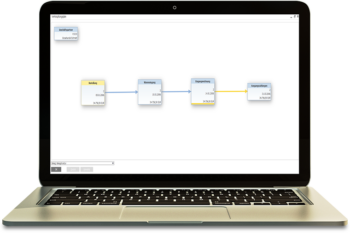
Simplify shopping
Procurement processes, pricing and supplier inquiries require clearly defined processes, which are supported by SAP Business One at every step. Real-time information as a basis enable a noticeable simpler and more efficient procurement process, which can be easily evaluated and processed through centralized order processing. The ERP system offers optimal transparency regarding individual agreements by recording the agreed-upon terms and making them available for comparative analyses at any time. For complex manufacturing and procurement processes, SAP Business One offers the option of using a planning assistant to plan required quantities and generate recommendations.
Start your free live demo nowInventory management
Companies in the retail sector often use drop shipping, fulfillment services, or distribution centers to avoid investing in their own warehouses. However, drop shipping and fulfillment services don't solve all of the problems of Inventory management. SAP Business One, as a central data hub, makes it possible to record, monitor, and transfer inventory levels to connected systems (inventory management). This allows for the management of stock from drop shipments and consignment warehouses, for example, and their transfer to a webshop. It also enables the management of returns, which, for instance, should undergo quality control before resale. This facilitates... needs-based planning and thus helps, for example, to avoid incorrect deliveries.
For companies with their own warehouse, warehouse management takes on an even greater role. Here, terms like... Seasonal goods, minimum stock levels, excess stock levels, maximum stock levels, actual quantities and target quantities Of central importance. Especially in the food and cosmetics trade, the best-before date (BBD) is a crucial aspect that SAP Business One takes into account by enabling warehouse organization based on the BBD. To ensure complete traceability of items throughout the supply chain, the ERP system supports batch and serial numbers at the storage location level.
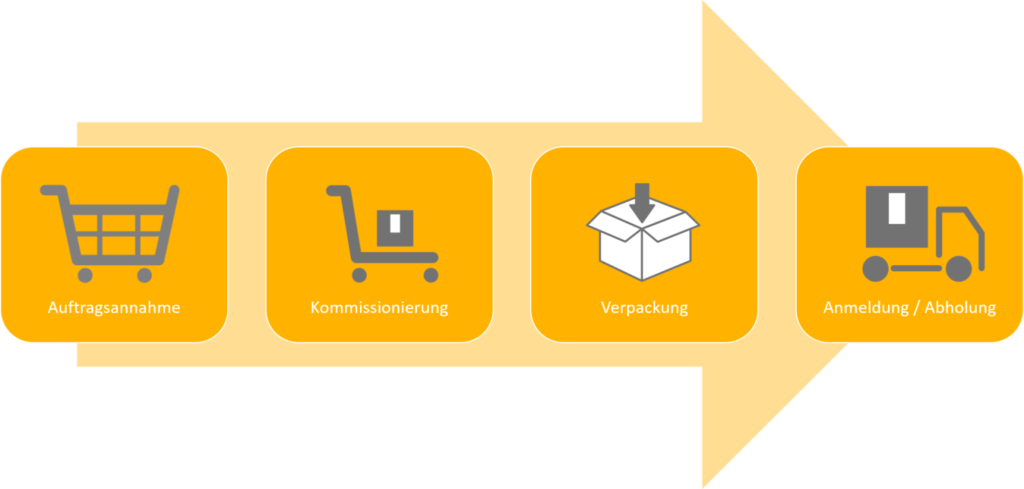
Fulfillment process
The term "fulfillment" refers to the entire order processing process Understood. Tasks in fulfillment include, for example:
- Acceptance of orders (e.g. from the webshop)
- Order picking (e.g. with an app or a scanner)
- Packaging of goods and products (with quality assurance, e.g., weighing and taking photos)
- Registration / Collection at the logistics company
The warehouse management app integrated into SAP Business One on mobile devices enables mobile warehouse & inventory management. It supports all goods movements in the warehouse, from goods receipt through pick & pack to delivery, in real time.
Opening own stores & branches
In the long term, companies operating in the retail sector can also utilize e-commerce opportunities in addition to other options. own stores The goal is to create an in-store shopping experience for customers. In SAP Business One, stores are represented as branches, and a profitability analysis for the stores is already included as standard. Employee hours can be recorded using apps.
Furthermore, SAP Business One offers an integration of POS solution „Customer Checkout“ The system fulfills and supports all standard point-of-sale requirements: sales, payment processing, discounting, and product and customer management. Each store has its own warehouse, which can be managed from headquarters and incorporates material requirements planning. This ensures that sufficient stock is always available in the store.

Planning extensions and interfaces
start smallWhen implementing SAP Business One, we initially focus on the essentials to ensure that the ERP system can be used productively as quickly as possible. Our pre-built templates allow for implementation within just a few days.
THINK BIGFor medium- and long-term planning, we work with our clients to develop a customized roadmap outlining when specific expansions are planned. Possible expansions include: integrating webshops, optimizing inventory management with apps, connecting logistics providers, utilizing the SAP POS solution (Customer Checkout), integrating CRM systems like Salesforce or MS Dynamics, and using marketing automation tools such as Mailchimp and SendGrid. These expansions can be implemented independently by the client via API.
The "THINK BIG, start small" approach is so important to us that we've given it its own section. Blog dedicate.
Start-up LCGK uses SAP Business One in the cloud for rapid customer growth
The rapidly growing food retailer LCGK has implemented the ERP system SAP Business One as a cloud-based solution.
„"With SAP Business One, for the first time I feel like we are a real company. The processes are now structured, everyone has their tasks. There is a common hub for information for everyone. This makes everything much easier."“
CEO Mert Philip Karpuz
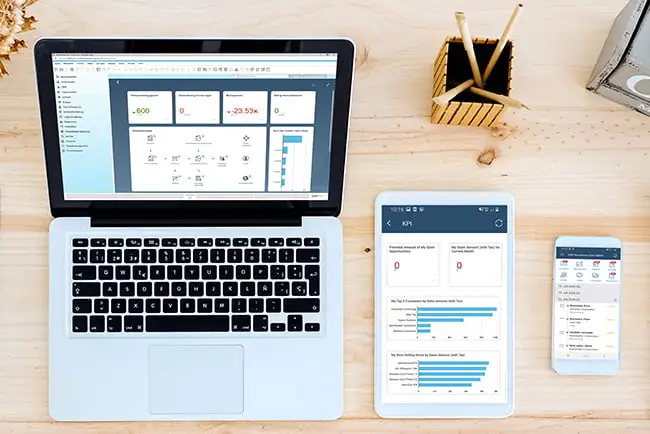
You would like to form your own opinion
from SAP Business One?
SAP Business One Cloud demo system
Try it free for 30 days with no obligation
Your SAP Business One demo system will be created in 3 minutes.
Start your free live demo now